
NASA’s 2026 Jupiter-Bound Spacecraft : As NASA’s Europa Clipper hurtles through space after its 2024 launch, all eyes turn to a pivotal moment in December 2026: its Earth gravity assist, a cosmic boost propelling it toward Jupiter.
This maneuver marks a key milestone for the spacecraft bound to unravel secrets of Europa, Jupiter’s icy moon hiding a vast subsurface ocean.
Table of Contents
The Thrill of the Journey
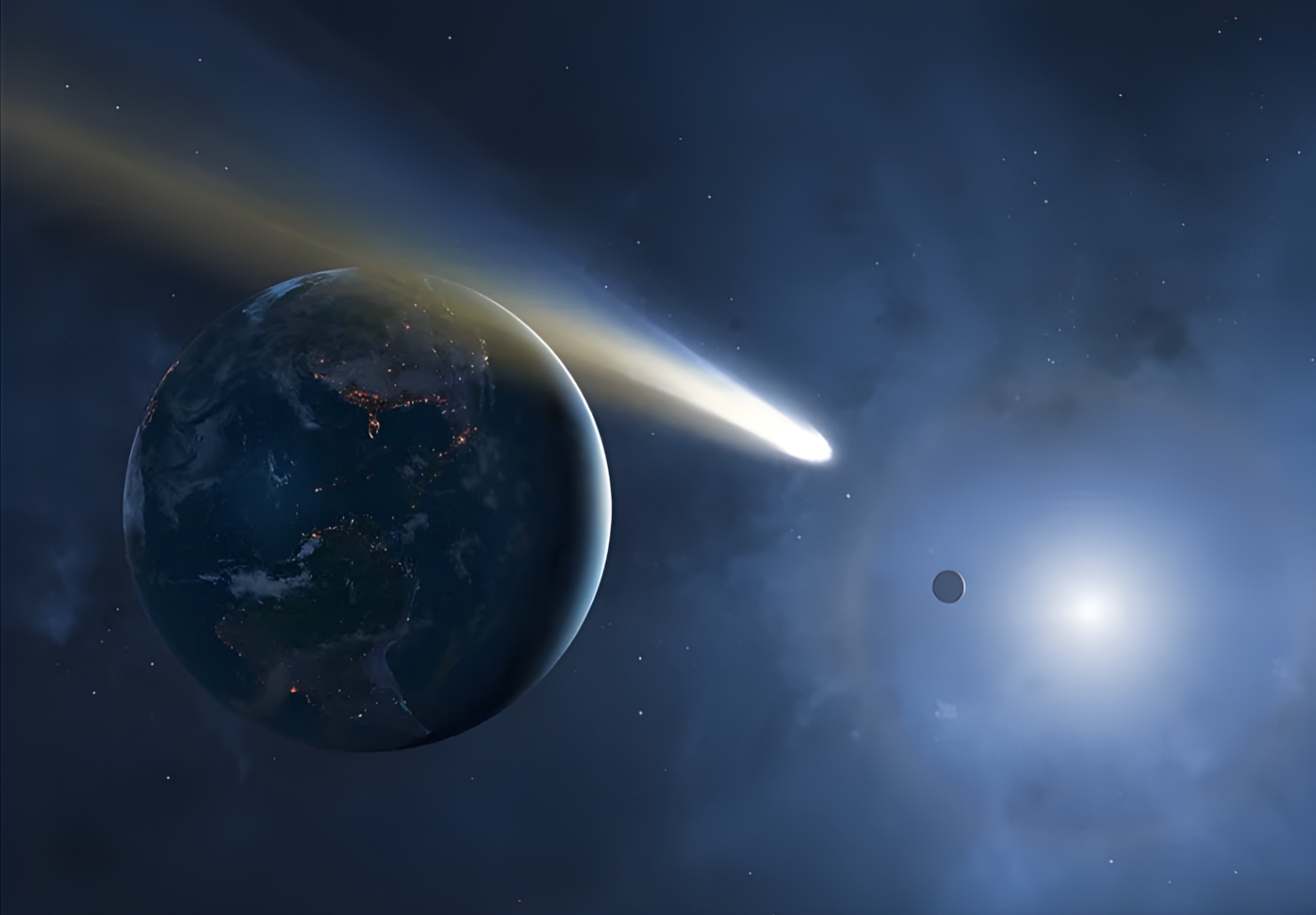
Imagine a spacecraft zipping past our home planet at 25,000 miles per hour, borrowing Earth’s gravity like a surfer catching a wave.
That’s Europa Clipper’s Earth flyby on December 3, 2026, coming within about 2,000 miles of the surface. Launched October 14, 2024, atop a SpaceX Falcon Heavy from Kennedy Space Center, the probe already nailed a Mars gravity assist on March 1, 2025, fine-tuning its path without burning precious fuel.
This isn’t just a pit stop—it’s a speed boost adding roughly 7,000 mph to sling the craft toward Jupiter, arriving in April 2030 after a 1.8 billion-mile trek.
Engineers at NASA’s Jet Propulsion Laboratory and Johns Hopkins Applied Physics Lab designed this trajectory to dodge Jupiter’s brutal radiation belts, opting for 49 daring flybys of Europa instead of a tight orbit that would fry the electronics in months.
Why Europa Fires Up Scientists
Europa isn’t your average moon—it’s a frozen world with a salty ocean lurking beneath 10 to 30 kilometers of ice, potentially twice Earth’s ocean volume.

Galileo’s 1990s flybys spotted hints of this hidden sea through magnetic quirks and possible water plumes erupting like geysers.
Fast-forward to now: Clipper aims to confirm if this ocean packs the ingredients for life—liquid water, energy from tidal flexing, and organic chemicals.
Picture Jupiter’s gravitational tug warping Europa’s ice shell, generating heat that might crack vents spewing ocean material into space.
Recent Juno data, still orbiting the gas giant, refined Jupiter’s shape and hints at moon interactions, paving the way for Clipper’s deeper dive. If Europa harbors microbes, it could rewrite our story in the cosmos.
Inside the Clipper’s High-Tech Arsenal
This beast spans over 100 feet with solar wings—the largest NASA ever flew to a planet—churning 8,000 watts near Earth but sipping just 640 at Jupiter.
Nine instruments fire in sync during flybys: REASON radar peers through ice like X-ray vision, probing up to 30 km deep for ocean interfaces.

EIS cameras snap 0.5-meter resolution shots, mapping chaos terrain where ice might thin; MISE sniffs chemicals like salts and organics.
SUDA dust analyzer catches plume grains for life tracers, while magnetometers hunt ocean-induced fields. A radiation vault shields brains from Jupiter’s particle storm, letting Clipper endure 49 passes over four years.
Engineering a Radiation Survivor
Jupiter’s magnetosphere is a particle blender—Europa Clipper’s vault, layered titanium and aluminum, takes the hits so computers don’t.
Solar panels degrade over time, but batteries bridge Europa’s shadow during orbits. The propulsion module packs 24 thrusters and 6,000 pounds of fuel for Jupiter orbit insertion—a six-hour burn in 2030.
Teams tested everything: vibration shakes mimicking launch, thermal vacuums copying space cold, and radiation blasts proving resilience. Backup plans abound—if one flyby glitches, dozens more ensure data haul triples prior missions.
Building Buzz and Legacy
Public love poured in via “Message in a Bottle”—2.6 million names etched on a plate with poet Ada Limón’s words, flying to Europa alongside water words in 103 languages.
It nods to 19th-century clipper ships, speedy traders mirroring the probe’s rapid flybys every two weeks. Clipper teams with ESA’s Juice, arriving 2031 for Ganymede focus, creating a one-two punch at Jupiter.

Post-mission, Clipper crashes into Ganymede or Jupiter around 2034, safely avoiding Europa contamination. This paves for landers scouting life-friendly spots.
NASA’s 2026 Jupiter-Bound Spacecraft What Lies Ahead for 2026 and Beyond
By February 2026, Clipper cruises smoothly, relaying health checks via Deep Space Network. The Earth flyby isn’t just physics—cameras might snap Earth selfies, inspiring awe like Voyager’s Pale Blue Dot.
Scientists anticipate plume hunts during low flybys at 25 km altitude, sampling ocean brew directly. Challenges loom: radiation wear, communication lags up to 50 minutes one-way.
Yet optimism reigns—Clipper could spot active vents or ice thickness maps guiding future drills. As President Trump’s administration eyes space triumphs post-2024 reelection, this mission underscores American ingenuity pushing cosmic frontiers.
In wrapping up, Europa Clipper embodies humanity’s quest: from earthly launchpads to alien oceans, chasing life’s echoes. This 2026 waypoint isn’t an end but a launchpad for discoveries that might confirm we’re not alone.
SCIENCE MARVELS – READ MORE : Ultimate 2026 Chester Zoo Guide: Top Animals to See, New Exhibits, Feeding Times, and Family Adventure Ideas
Frequently Asked Questions
Q: When exactly is the 2026 event for Europa Clipper? A: The Earth gravity assist flyby occurs on December 3, 2026, boosting speed for the Jupiter leg.
Q: Will Clipper land on Europa? A: No, it performs flybys only to avoid radiation damage; future landers may follow.

Q: Could it find life? A: Not directly, but it assesses habitability via ocean chemistry, ice structure, and energy sources.
Q: How much data will it send back? A: Gigabits via X/Ka-band, three times more than an orbiter, transmitted between flybys.
Q: What’s the backup if the flyby fails? A: Trajectory tweaks via thrusters; Mars assist already succeeded, providing margin.







Latest Comments