Indus Valley Civilization: For generations, schoolchildren have memorized a neat chronology. First came Mesopotamia. Then Egypt, with its pyramids and pharaohs. And alongside them, the Indus Valley Civilization—a contemporary, but somehow always placed third in the mental hierarchy of the ancient world.
That timeline is now shattered.
New research from the ancient site of Bhirrana in northern India suggests the roots of the Indus Valley Civilization stretch back not 5,000 years, but nearly 8,000 years. If confirmed, this would place its earliest beginnings well before the first pharaohs ruled Egypt. Before the great pyramids rose from the Giza plateau. Before Mesopotamia consolidated into city-states.
This is not a minor revision. This is a paradigm shift in our understanding of human history.
Table of Contents
The Astonishing Find: Carbon Dating That Changed Everything
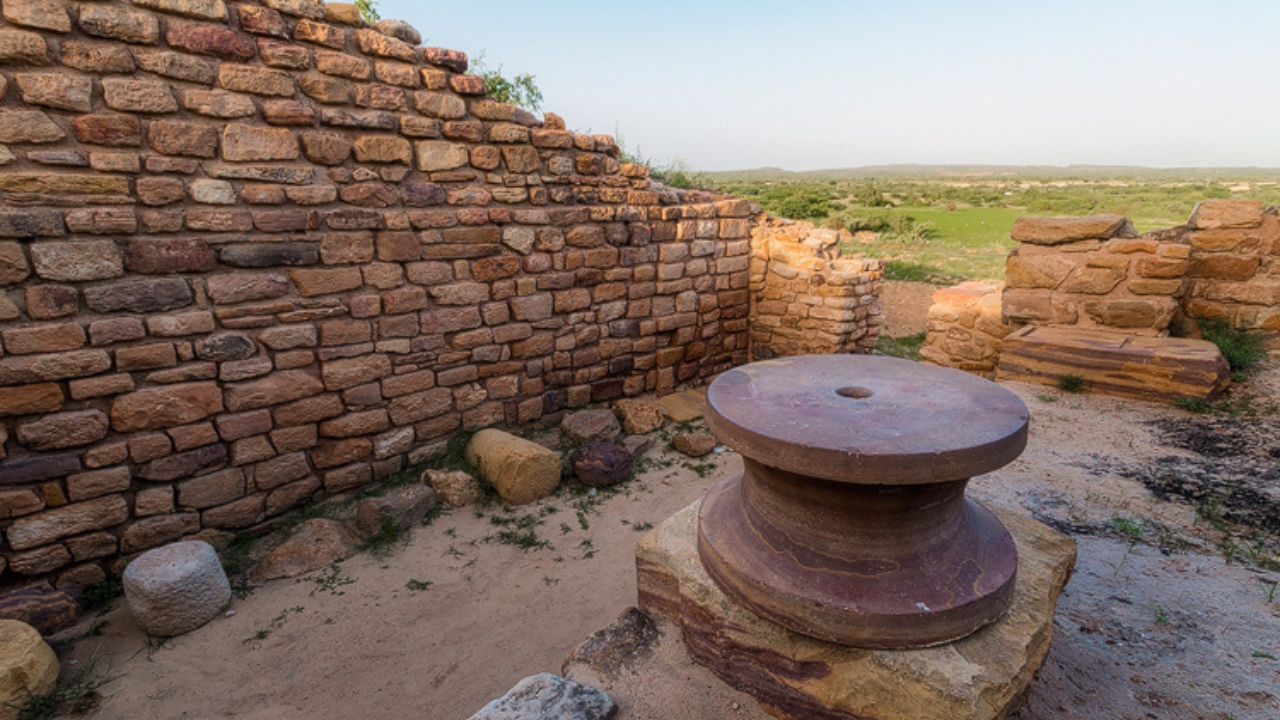
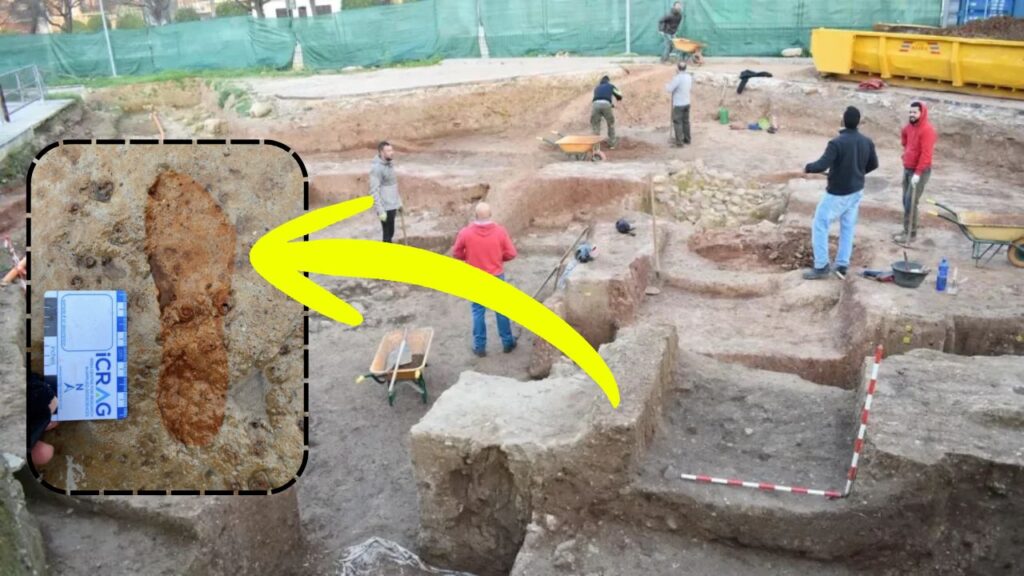
The evidence comes from the Archaeological Survey of India and collaborating institutions. Researchers analyzed pottery fragments and animal bones from deep settlement layers at Bhirrana, a site in the northern Indian state of Haryana. They used radiocarbon dating, the gold standard for determining age.
The results were mind-blowing.
Occupation at Bhirrana dates back nearly 9,000 years before present. That means organized communities were forming in the Indus Valley region around 7000 BCE. This pushes the civilization’s timeline thousands of years earlier than previously believed. The findings, published in the journal Scientific Reports, demand a complete rewriting of ancient history.
The implications are global. The Indus Valley Civilization may be the oldest of the great ancient civilizations, not merely a contemporary.
What the Deep Layers Reveal: The Slow Birth of Urban Life
The Bhirrana excavations provide a rare window into the transition from prehistoric to historic. The deepest layers show early farming communities. They used simple pottery. They herded animals. They built modest structures. Over millennia, these communities grew more complex.

This was not a sudden emergence.
The data suggests a gradual, indigenous development. People in the Indus region did not learn urban life from Mesopotamia or elsewhere. They invented it themselves, in their own time, on their own terms. The roots of their civilization run deep into the South Asian soil.
The implications challenge old diffusionist theories. These held that civilization spread from a single cradle (usually Mesopotamia) to the rest of the world. The Bhirrana evidence supports a different view: multiple cradles, multiple inventions, multiple paths to complexity.
The Urban Marvels of the Mature Phase
By 2600 BCE, the Indus Valley Civilization had reached its mature phase. Cities like Mohenjo-daro and Harappa reveal astonishing sophistication. Streets laid out in precise grid patterns. Homes with access to wells and bathing areas. Covered drainage systems running beneath the pavement.
This was urban sanitation on a scale unseen elsewhere.
Many houses may have had two storeys. Large granaries, marketplaces, and dockyards suggest complex economic organization. The cities supported craftsmen who produced finely drilled gemstone beads, standardized stone weights, and intricate carved seals. Metalworkers shaped copper and bronze into tools and weapons.
Yet mysteries remain.
Archaeologists have not uncovered grand temples or obvious royal palaces on the scale seen in Egypt. This absence may indicate a different form of governance—perhaps less centralized, perhaps more egalitarian. The Indus people left no monumental tombs, no ostentatious royal burials. Their values, their social structure, their beliefs remain elusive.
The Undeciphered Script: A Language That Refuses to Speak
One of the greatest puzzles of the Indus Valley Civilization is its writing system. Thousands of seals and inscriptions survive. They depict animals, symbols, and brief texts. But despite decades of effort, no one has deciphered them.
The script remains silent.
This is not for lack of trying. Linguists, cryptographers, and computer scientists have attacked the problem. Some see connections to Dravidian languages. Others propose links to unknown language families. Consensus remains elusive. The Indus script guards its secrets fiercely.
The Bhirrana findings add urgency to the quest. If the civilization is older than believed, its writing system may also be among the world’s earliest. Deciphering it could unlock a lost chapter of human thought.
Global Implications: Reshaping the Ancient World Order
The revised timeline places the Indus Valley Civilization alongside the earliest Neolithic developments in the Fertile Crescent. At its peak, it may have supported more than five million people. Its territory stretched from the Arabian Sea toward the Ganges basin. It was one of the largest cultural zones of the ancient world.
This was not a marginal society.
Yet it remains the least understood of the great early civilizations. Egypt left pyramids and hieroglyphs. Mesopotamia left ziggurats and cuneiform. The Indus left cities of brick, exquisite craftsmanship, and a script we cannot read. Its people shaped the subcontinent’s genetic and cultural heritage, but their voices are faint.
The Bhirrana discovery demands that we listen more carefully.
Why the Civilization Declined: Climate, Adaptation, and Resilience
For years, scholars attributed the Indus collapse to sudden catastrophe. Invasion? Flood? Disease? Climate change has emerged as the leading explanation. The weakening of monsoon patterns and the drying of river systems disrupted agriculture and trade.
But the Bhirrana evidence suggests a more nuanced story.

Communities adapted. They shifted from water-intensive wheat and barley to more drought-resistant crops like millets and rice. This agricultural transition may have reduced the need for large centralised storage and dense urban centers. The civilization did not so much collapse as transform.
Instead of a dramatic downfall, the Indus people slowly dispersed into smaller settlements. Their descendants carried their genes, their traditions, their knowledge across the subcontinent. The end was not a bang but a gradual fading.
Other theories—migration, flooding, disease, social change—remain in play. The truth may be multiple factors converging. But the new timeline adds depth to the story. This was a civilization with deep roots and a long decline, not a brief flowering doomed to vanish.
What This Means for History: The Oldest Among Equals
If the Bhirrana dating holds, the Indus Valley Civilization becomes not just one of the great ancient civilizations, but potentially the oldest. It predates the unification of Egypt under the first pharaohs. It predates the rise of Sumerian city-states. It stands at the dawn of complex society.
This is not to diminish Egypt or Mesopotamia. They remain extraordinary achievements. But the Indus people deserve their place at the head of the table. They built cities without grand monuments. They developed sanitation without royal decrees. They created art and writing without obvious kings.
Their civilization offers a different model of complexity. One less focused on elites and more on communities. One less concerned with eternity and more with daily life. One that speaks to us across millennia, even if we cannot yet read its words.
The Bhirrana discovery is just the beginning. As research continues, more secrets will emerge. More dates will refine. More mysteries will surface. The Indus Valley Civilization is finally stepping out of the shadow of its better-known contemporaries.
And the world is beginning to see it clearly for the first time.
In-Depth FAQs: Your Questions Answered
1. How much older is the Indus Valley Civilization than previously thought?Traditional timelines placed the mature Indus Valley Civilization between 2600 and 1900 BCE. The new radiocarbon dates from Bhirrana suggest occupation dating back nearly 9,000 years before present, or approximately 7000 BCE. This pushes the earliest roots of the civilization back by several thousand years, placing its formative phase before the rise of Egypt’s first pharaohs (circa 3100 BCE).

2. How reliable is the new carbon dating?The research, published in the peer-reviewed journal Scientific Reports, used radiocarbon dating on animal bones and pottery fragments from deep, well-stratified settlement layers. Radiocarbon dating is a mature and reliable technique when samples are properly collected and contexts are secure. The study’s methodology has passed scientific scrutiny, though further testing at other sites will help confirm the broader timeline.
3. Does this mean the Indus Valley Civilization is older than Egypt and Mesopotamia?The new dates suggest that organized agricultural communities in the Indus region are as old as, or older than, comparable developments in Egypt and Mesopotamia. However, the mature urban phase of the Indus Civilization (with large cities, writing, and complex trade) still flourished around 2600 BCE, roughly contemporary with the Old Kingdom in Egypt and the Sumerian city-states. The discovery pushes back the origins of the civilization, not just its peak.
4. Why haven’t archaeologists found royal tombs or grand temples in Indus cities?This is one of the great mysteries. The absence of obvious elite architecture may indicate a different form of social organization. Some scholars suggest the Indus society was more egalitarian or collectively governed, without the extreme concentration of wealth and power seen in Egypt or Mesopotamia. Others propose that elite structures simply haven’t been found yet or were built of perishable materials. The question remains open.
5. Will the Indus script ever be deciphered?There is hope, but no certainty. The main obstacles are the brevity of inscriptions (most are very short) and the lack of a bilingual text (like the Rosetta Stone). Advances in computational analysis and statistical methods are providing new insights into the script’s structure. If a bilingual inscription is someday found, or if computational methods crack the code, decipherment could happen rapidly. Until then, the script remains one of history’s most tantalizing puzzles.